← Back to Line Graph Hub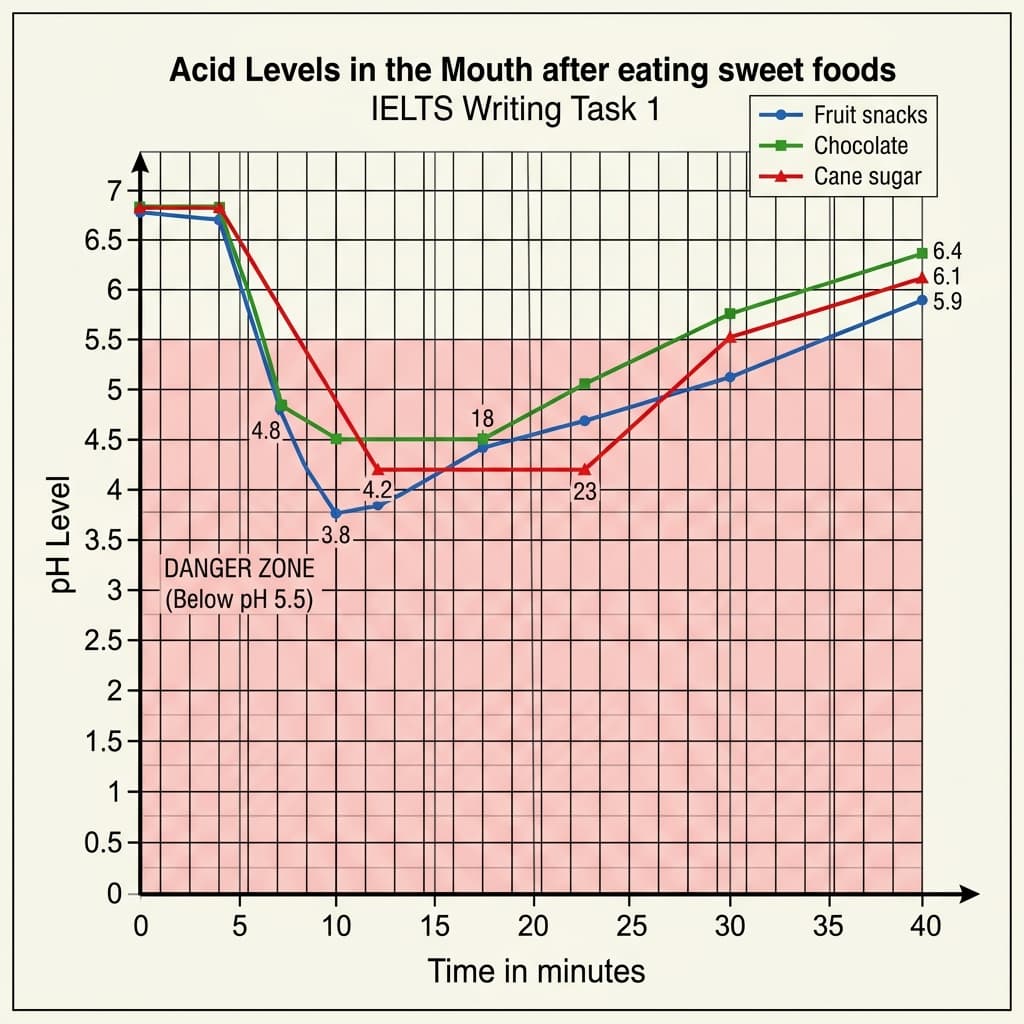
Sweet foods and acid levels in the mouth
The Question:
The line graph below shows the acid levels in the mouth after eating sweet foods, which can cause tooth decay.
✍️ Band 9 Model Answer
The line graph illustrates the changes in pH levels in the mouth over a 40-minute period following the consumption of three different types of sugary snacks: fruit snacks, chocolate, and cane sugar.
Overall, all three foods triggered a rapid drop in pH levels shortly after ingestion, moving the environment into the "danger zone" for tooth decay (below pH 5.5). However, the duration of acid exposure and the speed of recovery varied significantly between the items.
Cane sugar caused the most immediate and severe impact. Within just 5 minutes of consumption, the pH plummeted from a neutral 7.0 to a highly acidic 3.5. It remained below the critical 5.5 threshold for more than 30 minutes, finally returning to a safe level at around the 40-minute mark. Fruit snacks followed a similar initial trajectory, though the drop was slightly less extreme, bottoming out at pH 4.5 after 10 minutes.
Chocolate proved to be the least harmful of the three. Although it did cause the pH to dip into the danger zone, it only reached a minimum of 5.0 and began a much steadier recovery. By 25 minutes after eating, the mouth's pH had already returned to safe levels. This suggests that while all sweet foods contribute to an acidic environment, cane sugar and fruit snacks pose a more prolonged risk to dental health than chocolate.
✨ Key Vocabulary & Phrasing
TriggeredCaused an event or situation to happen or exist.
IngestionThe process of taking food or drink into the body.
ThresholdThe level or point at which something starts to happen.
Bottoming outReaching the lowest point before starting to rise.
ProlongedContinuing for a long time or longer than usual.
Practice this task with AI
Write your own response to this prompt and get an instant Band 9 evaluation with detailed feedback.
Start Writing EvaluatorExpert Insights
Frequently Asked Questions
Get definitive answers from IELTS examiners and high-band experts.
You should spend exactly 20 minutes on Task 1. This leaves you with 40 minutes for the more heavily weighted Task 2.
You must write at least 150 words. Writing significantly less will result in a penalty for your Task Achievement score.
No. Task 1 (Academic) is an objective summary of data. You should never include personal opinions or external information not shown in the chart.
Standard structure: Introduction (paraphrase), Overview (state main trends), and 2-3 Detail paragraphs (describe specific data points).
The most common types are Bar Graphs, Line Graphs, Pie Charts, Tables, Process Diagrams, and Maps.
Yes. Without a clear overview highlighting the main features or trends, it is impossible to score Band 7 or higher in Task Achievement.
It is generally better to use formal, passive voice and avoid personal pronouns like 'I' or 'me'.
Varying your language with phrases like 'a significant majority' or 'roughly a quarter' demonstrates a higher lexical resource for Band 7+.